
May 6, 2026
Poly Furniture vs Wood Outdoor Furniture
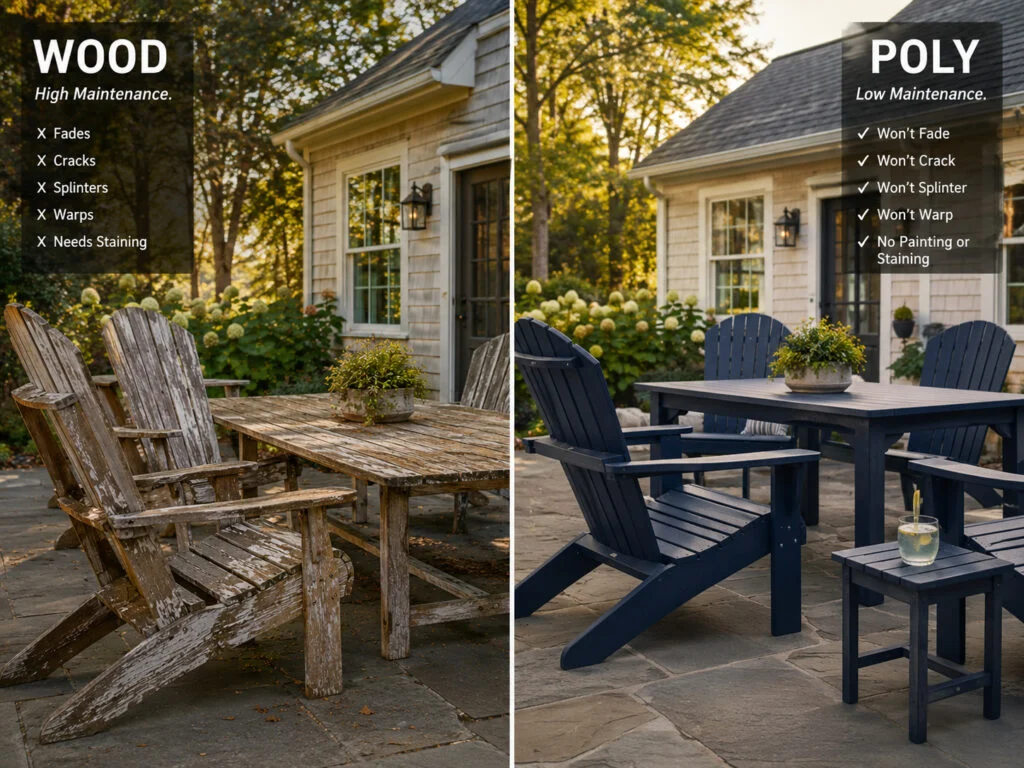
Poly Furniture vs Wood Outdoor Furniture
When choosing outdoor furniture, many shoppers compare poly furniture vs wood outdoor furniture. Both can create a comfortable and attractive outdoor space, but they perform very differently once they are exposed to sun, rain, humidity, temperature changes, and everyday use.
Wood outdoor furniture has a classic, natural appearance. Poly furniture offers a durable, low-maintenance alternative made from poly lumber and built for long-term outdoor living.
If you are still learning the basics, start with what poly furniture is before comparing materials. Poly furniture is outdoor furniture made from durable poly lumber, designed to handle real weather with less maintenance than many traditional patio furniture materials.
What Is Wood Outdoor Furniture?
Wood outdoor furniture is made from natural lumber. Common outdoor furniture woods may include cedar, teak, pine, acacia, or other species depending on the style, price point, and intended use.
Wood has a warm, traditional appearance that many homeowners like. It can look rustic, classic, premium, or decorative depending on the design. For covered porches, garden seating, cabins, and natural outdoor settings, wood furniture can be a beautiful choice.
The tradeoff is maintenance. Because wood is an organic material, it reacts to moisture, sunlight, and changing weather. Without proper care, wood outdoor furniture may crack, splinter, fade, warp, rot, or lose its finish over time.
What Is Poly Furniture?
Poly furniture is outdoor furniture made from poly lumber. Poly lumber is formed into sturdy boards that can be used to build chairs, tables, rockers, gliders, swings, ottomans, benches, and other outdoor furniture pieces.
Unlike natural wood, poly lumber does not need to be stained, sealed, sanded, or painted every season. It is designed for outdoor performance and built to resist many of the problems that shorten the life of wood furniture.
That makes poly outdoor furniture a strong choice for patios, porches, decks, fire pit areas, outdoor dining spaces, campgrounds, churches, parks, schools, hospitality patios, and commercial gathering spaces.
Durability: Poly Furniture vs Wood
Durability is one of the biggest differences between poly furniture and wood outdoor furniture.
Wood furniture can be strong, but its lifespan depends heavily on the type of wood, the finish, the climate, and how consistently it is maintained. When wood sits outside, it can absorb moisture, dry out, expand, contract, crack, splinter, or rot.
Poly furniture is built for real outdoor exposure. It does not rot like wood, does not splinter, and does not require a protective stain or sealer to stay usable. That gives poly furniture a major advantage for buyers who want outdoor furniture that can handle changing weather conditions with less effort.
For a deeper look at long-term performance, read how long poly furniture lasts.
Maintenance: Poly Furniture Requires Less Work
Maintenance is where poly furniture often wins the comparison.
Wood outdoor furniture may need regular care, including:
- Staining
- Sealing
- Sanding
- Painting
- Refinishing
- Covering
- Seasonal storage
- Checking for splinters or soft spots
Poly furniture is much easier to maintain. Most dirt, pollen, dust, and outdoor buildup can be cleaned with mild soap, water, and a soft cloth or brush. There is no need to stain, seal, sand, or repaint the material.
That matters for busy families who want to enjoy their patio instead of constantly maintaining it. It also matters for businesses, campgrounds, churches, schools, and hospitality spaces where furniture needs to stay presentable without creating extra labor.
If maintenance is a major factor in your decision, it may also help to compare poly furniture vs metal patio furniture, since metal furniture can come with its own care concerns.
Weather Resistance: Poly Handles Outdoor Conditions Better
Outdoor furniture has to handle more than occasional sunshine. It may face rain, humidity, sprinklers, snow, wind, dirt, pollen, and intense sun exposure.
Wood furniture can perform well outdoors when it is properly finished and maintained. But without care, moisture and sun can shorten its life. Exposed wood can swell, crack, fade, splinter, or deteriorate over time.
Poly furniture is made for outdoor conditions. It does not rely on seasonal stain or sealer to remain usable. It does not absorb moisture the way wood can. It also avoids the splintering and rotting concerns that many wood furniture owners eventually face.
For exposed patios, open porches, fire pit areas, outdoor dining spaces, and commercial outdoor areas, poly furniture is usually the more practical weather-resistant choice.
Comfort: Both Can Be Comfortable
Comfort depends more on design than material. A well-designed wood chair can be comfortable, and a well-designed poly chair can be comfortable too.
The difference is how that comfort holds up over time.
Wood furniture can become rough, splintered, loose, or worn if it is not maintained. Poly furniture has a smooth, sturdy feel and does not splinter. That helps it stay comfortable with less ongoing care.
For everyday outdoor living, poly furniture works well across seating styles such as Adirondack chairs, rockers, gliders, swings, dining chairs, and deep seating pieces.
You can browse poly outdoor seating to compare options for porches, patios, fire pit areas, and outdoor gathering spaces.
Appearance: Natural Wood Look vs Color Options
Wood furniture has a natural look that many people love. It can bring warmth, grain, and organic character to an outdoor space. For rustic cabins, garden settings, or covered porches, that natural appearance may be the deciding factor.
Poly furniture has a cleaner, more consistent appearance. It is available in color options that can match home exteriors, patio designs, school colors, campground layouts, church spaces, business branding, or commercial outdoor settings.
If you want natural grain and are willing to maintain it, wood may be appealing. If you want a finished look with long-term color consistency and less upkeep, poly furniture is usually the better fit.
Cost: Upfront Price vs Long-Term Value
Wood outdoor furniture can vary widely in price. Some wood furniture may be cheaper upfront, especially if it is made from lower-cost lumber. Premium wood furniture can be expensive, especially when built from higher-end materials.
But price should not be measured only at purchase.
With wood furniture, the long-term cost may include:
- Stain
- Sealer
- Paint
- Brushes and supplies
- Covers
- Storage
- Repairs
- Replacement parts
- Replacement furniture
Poly furniture may cost more than basic wood options upfront, but it is built for long-term value. Because it requires less maintenance and is designed to hold up outside, it can be the better investment over time.
For more on long-term value, read is poly outdoor furniture worth it.
Best Places to Use Poly Furniture
Poly furniture is a strong choice anywhere outdoor furniture needs to be durable, comfortable, and low maintenance.
It works well for:
- Front porches
- Backyard patios
- Decks
- Fire pit areas
- Outdoor dining spaces
- Poolside seating areas
- Campgrounds
- Churches
- Schools
- Parks
- Hospitality patios
- Community spaces
- Commercial outdoor areas
For larger layouts, start with the full Shop Poly Outdoor Furniture collection, then narrow by Seating or Tables depending on how the space will be used.
Best Places to Use Wood Outdoor Furniture
Wood furniture can still be a good choice in the right setting.
It may work well for:
- Covered porches
- Rustic cabins
- Decorative garden seating
- Natural landscape settings
- Spaces where wood grain is central to the design
- Buyers who enjoy refinishing and maintaining wood
Wood outdoor furniture is best for people who value the natural look and are comfortable with the care required to protect it.
Poly Furniture vs Wood: Which Is Better?
Poly furniture is usually better if you want outdoor furniture that is low maintenance, weather resistant, durable, colorful, and built for long-term outdoor use.
Wood outdoor furniture may be better if you want a natural wood appearance and are willing to maintain it regularly.
For most homeowners and commercial buyers who want dependable outdoor furniture without seasonal refinishing, poly furniture is the more practical choice.
Questions to Ask Before Choosing
Before deciding between poly furniture and wood outdoor furniture, ask:
- Will the furniture sit in a covered or exposed area?
- How much maintenance do you realistically want to do?
- Is long-term durability more important than lowest upfront price?
- Do you prefer natural wood grain or color options?
- Will the furniture be used by a family, guests, customers, church members, campers, students, or the public?
- Do you need seating, tables, ottomans, or a complete outdoor layout?
For a more complete buying checklist, read what to ask before buying poly outdoor furniture.
Final Thoughts
The biggest difference between poly furniture and wood outdoor furniture is maintenance.
Wood offers natural beauty, but it requires more care to keep it looking and performing well outside. Poly furniture offers long-term durability, comfort, color options, and weather resistance with much less upkeep.
If you are furnishing a patio, porch, fire pit area, outdoor dining space, campground, church, hospitality patio, or commercial outdoor area, poly outdoor furniture is built for real life outside.
Start with the full Shop Poly Outdoor Furniture collection or visit the Kanyon Poly Warranty page to learn more about long-term confidence before you buy.