
May 6, 2026
Poly Furniture vs Metal Patio Furniture
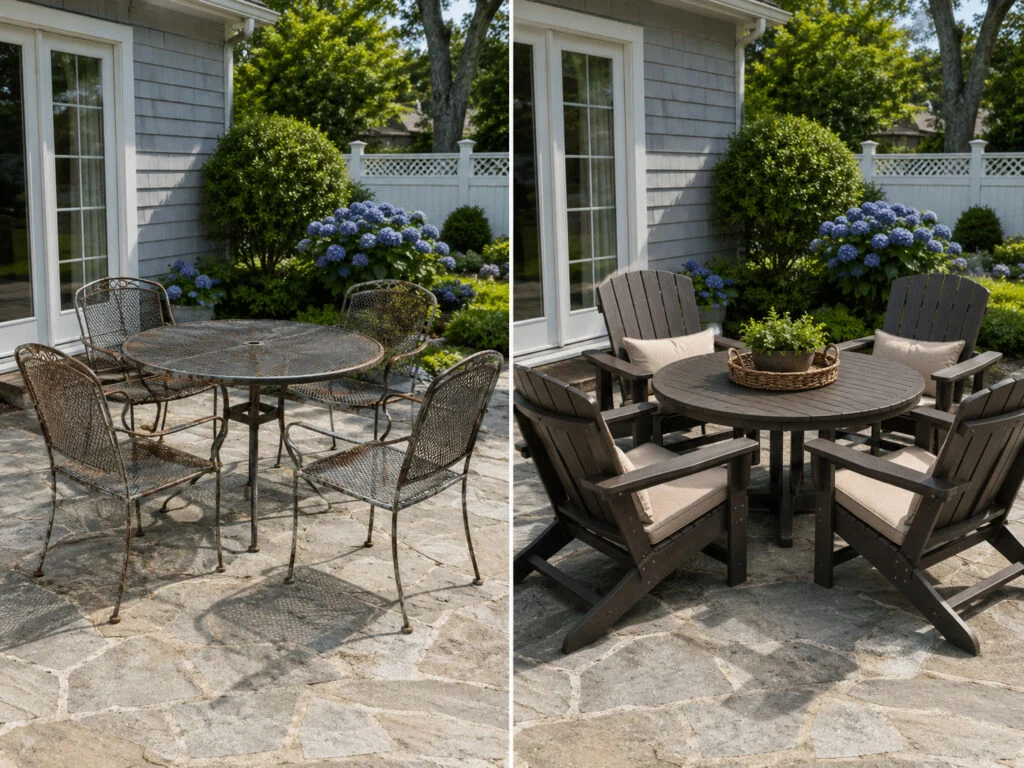
Poly Furniture vs Metal Patio Furniture
When choosing outdoor furniture, many shoppers compare poly furniture vs metal patio furniture. Both can be attractive, sturdy, and useful in the right setting, but they perform very differently once they are exposed to sun, rain, humidity, temperature changes, and everyday outdoor use.
Metal patio furniture has been popular for years because it can feel strong, decorative, and familiar. Poly furniture offers a durable, low-maintenance alternative made from poly lumber and built for long-term outdoor living.
If you are still learning the basics, start with what poly furniture is. Poly furniture is outdoor furniture made from durable poly lumber, designed to handle real weather with less maintenance than many traditional patio furniture materials.
What Is Metal Patio Furniture?
Metal patio furniture is outdoor furniture made from materials such as aluminum, steel, or wrought iron. It can be used for dining sets, benches, chairs, bistro sets, decorative garden furniture, and commercial patio seating.
Metal furniture can be a good fit for certain outdoor spaces. Aluminum is often lightweight and rust-resistant. Steel can feel strong and sturdy. Wrought iron can offer a more decorative, traditional look.
The tradeoff is that metal furniture can come with outdoor performance concerns. Depending on the material and finish, it may get hot in the sun, feel cold in cooler weather, rust if protective coatings wear down, scratch, dent, or require cushions to stay comfortable.
What Is Poly Furniture?
Poly furniture is outdoor furniture made from poly lumber. Poly lumber is formed into sturdy boards that can be used to build outdoor chairs, tables, rockers, gliders, swings, ottomans, benches, and accessories.
Unlike metal patio furniture, poly furniture does not rust. It does not rely on a painted metal finish to protect the main structure. It also does not have the same hot-metal seating concern that can make some metal furniture uncomfortable in direct sun.
That makes poly outdoor furniture a strong choice for patios, porches, decks, fire pit areas, outdoor dining spaces, campgrounds, churches, parks, schools, hospitality patios, and commercial gathering spaces.
Durability: Poly Furniture vs Metal
Durability is one of the biggest reasons shoppers compare poly furniture and metal patio furniture.
Metal furniture can be durable, especially when made from quality materials. Aluminum often performs better against rust than steel or iron. Steel and wrought iron can be strong, but they depend heavily on coatings, paint, or finishes to protect them from moisture. If those finishes chip or wear down, rust can become a problem.
Poly furniture is built for real outdoor exposure. It does not rust, rot, splinter, or require a protective coating to stay usable. It is designed to handle changing outdoor conditions with less maintenance.
For a deeper look at long-term performance, read how long poly furniture lasts.
Maintenance: Poly Furniture Requires Less Work
Maintenance is where poly furniture often becomes the more practical choice.
Metal patio furniture may require:
- Checking for rust
- Touching up scratches or chips
- Cleaning oxidation or discoloration
- Repainting or refinishing worn areas
- Protecting exposed metal
- Replacing cushions
- Covering or storing pieces during harsh weather
Poly furniture is much easier to maintain. Most dirt, pollen, dust, and outdoor buildup can be cleaned with mild soap, water, and a soft cloth or brush. There is no need to repaint, seal, sand, or protect the material from rust.
That matters for busy families who want to enjoy their patio instead of managing another seasonal maintenance project. It also matters for commercial spaces where furniture needs to stay clean and presentable without creating extra labor.
If you are comparing several traditional materials, it may also help to read poly furniture vs wood outdoor furniture.
Weather Resistance: Poly Handles Outdoor Conditions Better
Outdoor furniture has to face more than occasional sunshine. It may deal with rain, humidity, snow, sprinklers, dirt, pollen, wind, and intense UV exposure.
Metal furniture can perform well outdoors when it is properly coated and maintained. But when coatings scratch, chip, or wear down, moisture can reach the metal underneath. That can lead to rust or finish damage, especially with steel or wrought iron.
Poly furniture avoids those problems. Because it is made from weather-resistant poly lumber, it does not rely on paint or powder coating to protect the main structure. It is built for outdoor conditions and frequent use.
For exposed patios, open porches, outdoor dining spaces, fire pit areas, hospitality patios, parks, campgrounds, and commercial gathering spaces, poly furniture is usually the more practical weather-resistant choice.
Heat and Comfort: Poly Is Easier to Live With
Comfort is another major difference between poly furniture and metal patio furniture.
Metal can get hot in direct sun and cold in cooler weather. Dark metal pieces may become uncomfortable to touch during summer heat. Many metal chairs and benches also rely on cushions to feel comfortable for longer sitting.
Poly furniture has a smooth, sturdy feel and does not create the same hot-metal seating experience. It works well across seating styles such as Adirondack chairs, rockers, gliders, swings, dining chairs, and deep seating pieces.
For patios, porches, fire pit areas, and outdoor gathering spaces where people sit and stay awhile, poly furniture is often easier to enjoy every day.
You can browse poly outdoor seating to compare options for relaxing, dining, gathering, and outdoor living.
Rust, Scratches, and Finish Wear
Rust is one of the biggest concerns with metal patio furniture.
Aluminum does not rust the same way steel or iron can, but it can still experience finish wear, oxidation, or surface damage. Steel and wrought iron can be strong, but scratches and chips can expose the metal underneath. Once moisture reaches exposed metal, rust can spread.
Poly furniture does not rust. It also does not depend on a surface paint layer for its primary color and structure. That gives it an advantage in spaces where furniture may be exposed to rain, sprinklers, humidity, snow, cleaning, or heavy use.
For buyers who want outdoor furniture that stays presentable with less upkeep, poly furniture is often the better fit.
Weight and Stability
Metal patio furniture varies widely in weight. Aluminum furniture is often lightweight, which makes it easy to move but sometimes less stable in windy conditions. Steel and wrought iron are heavier, which can add stability but may make furniture harder to move or rearrange.
Poly furniture offers a strong balance. It feels sturdy and substantial without the same rust concerns as heavy metal furniture. It can work well in residential layouts and commercial spaces where furniture needs to feel dependable.
For outdoor dining areas, front porches, fire pits, patios, and community spaces, that sturdy feel helps the furniture seem permanent and reliable.
Appearance: Decorative Metal vs Color Options
Metal patio furniture can have a classic, formal, or decorative appearance. Wrought iron, in particular, is often chosen for ornate outdoor spaces, garden areas, and traditional patio settings.
Poly furniture has a cleaner, more consistent look. It is available in color options that can match home exteriors, patio designs, school colors, campground layouts, church spaces, business branding, or hospitality patios.
If you want decorative metalwork, metal may be appealing. If you want a colorful, coordinated, low-maintenance outdoor setup, poly furniture is usually the better fit.
Cost: Upfront Price vs Long-Term Value
Metal patio furniture comes in a wide range of prices. Some lightweight metal patio sets can be inexpensive upfront. Higher-quality aluminum, steel, or wrought iron furniture can be much more expensive.
But the purchase price is only part of the decision.
With metal furniture, long-term costs may include:
- Cushions
- Replacement cushions
- Covers
- Rust treatment
- Paint or finish touch-ups
- Storage
- Repairs
- Replacement furniture
Poly furniture may cost more than basic metal patio furniture upfront, but it is built for long-term value. Because it requires less maintenance and avoids many common outdoor furniture problems, it can be the better investment over time.
For more on long-term value, read is poly outdoor furniture worth it.
Best Places to Use Poly Furniture
Poly furniture is a strong choice anywhere outdoor furniture needs to be durable, comfortable, and low maintenance.
It works well for:
- Front porches
- Backyard patios
- Decks
- Fire pit areas
- Outdoor dining spaces
- Poolside seating areas
- Campgrounds
- Churches
- Schools
- Parks
- Hospitality patios
- Community spaces
- Commercial outdoor areas
For larger layouts, start with the full Shop Poly Outdoor Furniture collection, then narrow by Seating or Tables depending on how the space will be used.
Best Places to Use Metal Patio Furniture
Metal patio furniture can still be a good choice in the right setting.
It may work well for:
- Covered patios
- Decorative garden areas
- Formal outdoor spaces
- Bistro-style seating
- Lightweight seasonal dining sets
- Spaces where ornate metal design is part of the look
- Buyers who are comfortable maintaining finishes and cushions
Metal can be attractive and functional, but it is best for people who understand the care required to keep it looking good outdoors.
Poly Furniture vs Metal: Which Is Better?
Poly furniture is usually better if you want outdoor furniture that is low maintenance, weather resistant, durable, comfortable, colorful, and built for long-term outdoor use.
Metal patio furniture may be better if you prefer a specific metal look, want ornate decorative designs, or are comfortable managing heat, rust, scratches, cushions, and finish maintenance.
For most homeowners and commercial buyers who want dependable outdoor furniture without rust concerns or seasonal refinishing, poly furniture is the more practical choice.
Commercial Spaces: Why Poly Often Wins
Commercial outdoor spaces need furniture that can handle repeated use while staying clean and presentable. That is where poly furniture can be especially valuable.
Restaurants, hospitality patios, campgrounds, churches, schools, parks, apartment common areas, and community spaces need furniture that can handle traffic, cleaning, weather, and daily use. Metal furniture can work in some of these spaces, but rust, finish wear, cushions, and heat can create extra maintenance.
For high-use spaces, read durable outdoor furniture for commercial spaces or learn more about outdoor furniture for hospitality patios.
Questions to Ask Before Choosing
Before deciding between poly furniture and metal patio furniture, ask:
- Will the furniture sit in direct sun?
- Will it be exposed to rain, sprinklers, humidity, or snow?
- How much maintenance do you realistically want to do?
- Do you want furniture with or without cushions?
- Is rust a concern in your environment?
- Is long-term durability more important than the lowest upfront price?
- Will the furniture be used at home or in a commercial space?
- Do you need seating, tables, ottomans, or a complete outdoor layout?
For a more complete buying checklist, read what to ask before buying poly outdoor furniture.
Final Thoughts
The biggest difference between poly furniture and metal patio furniture is long-term outdoor performance.
Metal furniture can be strong and stylish, but it can also get hot, rust, scratch, dent, require cushions, or need finish maintenance depending on the material. Poly furniture is built from durable poly lumber and designed to handle real outdoor conditions with less upkeep.
If you are furnishing a patio, porch, fire pit area, outdoor dining space, campground, church, school, hospitality patio, or commercial outdoor area, poly outdoor furniture is built for real life outside.
Start with the full Shop Poly Outdoor Furniture collection or visit the Kanyon Poly Warranty page to learn more about long-term confidence before you buy.